
Using D-Wave's Quantum Annealer to Design Peptides
A Summary in Plain English

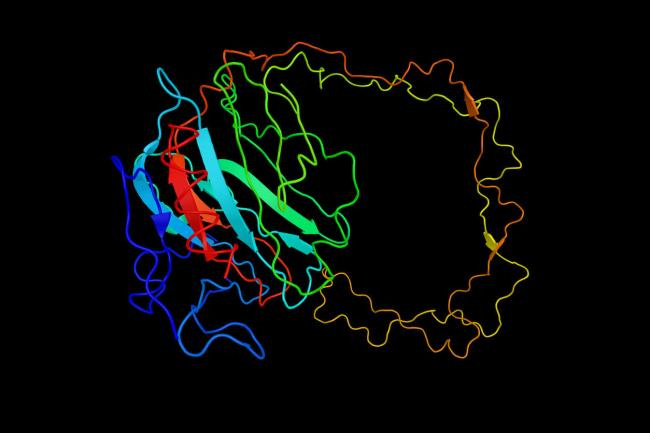
Drug discovery is time-consuming and expensive, as it frequently involves designing rigidly folded peptides. D-Wave's quantum annealer can help address the problem by alleviating the computational lifting involved.
In 2020, biomedical scientists enabled D-Wave's quantum processing unit to interface with Rosetta, a state-of-the-art protein design software suite. This approach allowed them to create large-scale, realistic protein folding simulations for wet-lab experiments.
These biomedical scientists named their device QPacker, after Rosetta's protein design algorithm Packer. Unlike Packer, QPacker resolves many of the scalability issues that protein folding presents to classical computers.
Computational protein design hindered by the inability of classical computers to handle large search problems. After all, protein design entails analyzing perhaps several thousand protein folding possibilities in a relatively short time. Even the largest supercomputers find this challenge to be a daunting task.
Scientists use Rosetta software for various protein design tasks, from configuring protein topologies to creating diverse synthetic heteropolymers. The software designs protein sequences by simulating a search of (nearly) all possible conformational isomer solutions.
However, as the number of possible protein solutions is quite large, analyzing even a subset of solutions is taxing for a classical computer. When the number of designable positions (or the number of conforming possibilities at each position) is too numerous, scalability issues occur.
Fortunately, quantum computing is highly scalable and can serve as a viable alternative. Whereas classical computers rely on iterative processing to solve complex problems, quantum computers employ the superpositioning power of multi-state qubits to find the best possible solution.
A process known as quantum annealing ranks all possible solutions by their probable success. It also supercharges the ability of the Rosetta software to simulate protein folding.
About Quantum Annealing
As noted above, quantum annealing ranks all possible answers on their probability of success. Like an algorithm, this feature effectively optimizes a solution among a discrete set of possibilities.
So, given an optimization problem, how does quantum annealing minimize a set of possible solutions? It first draws from a sample of outputs to find results that minimally satisfy the objective. The most probable answers conform to the lowest-energy classical state (typically an equal superposition of all states). That’s because proteins acquire structures that correspond with the lowest energy conformation.
This process relies on a transverse Ising model in which the phase transition toward the optimization target occurs gradually via changes in the transverse field (the optimization target being the list of highly probable results).
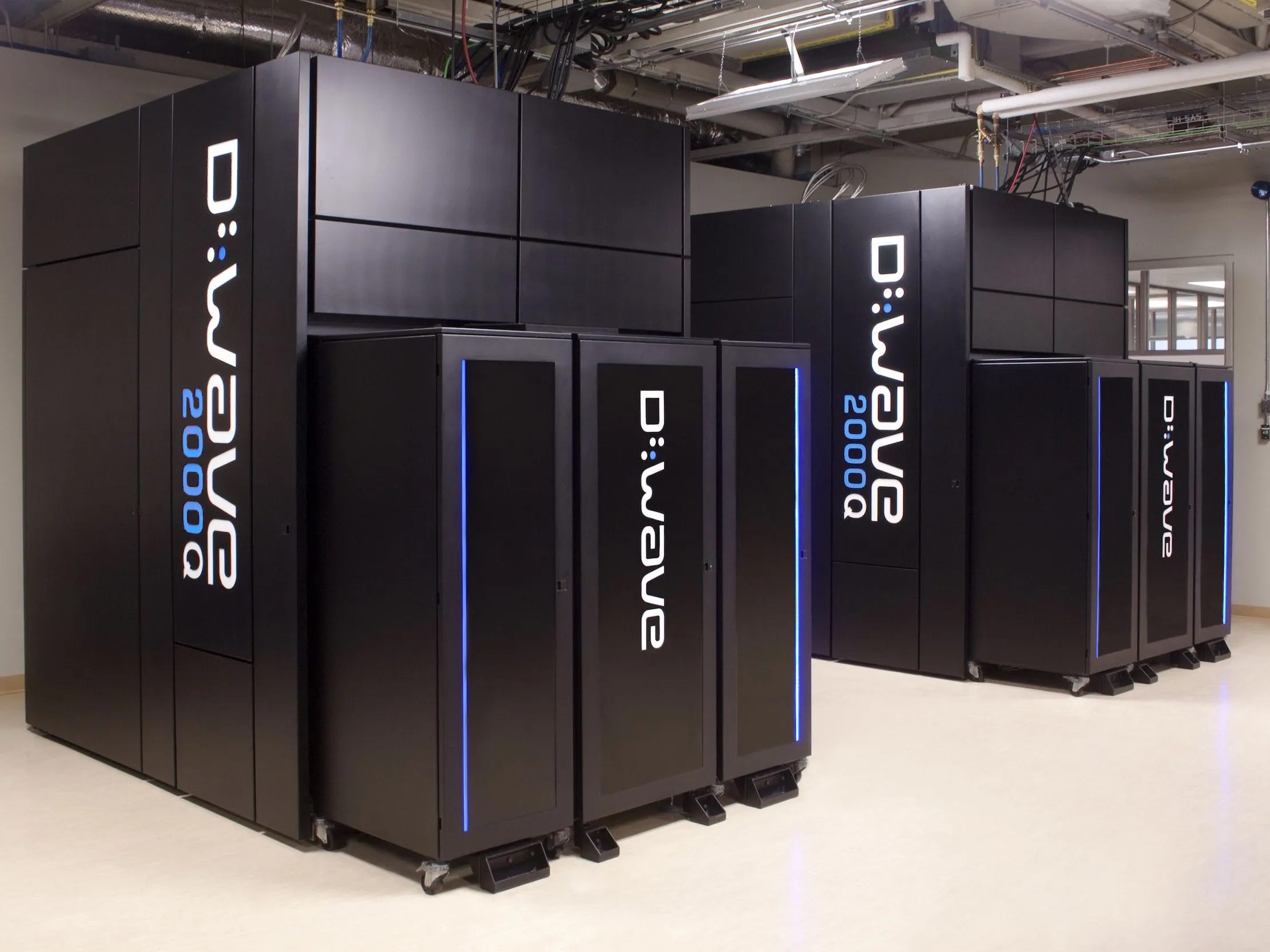
In this case, the problem driving this gradual transition - and thus optimizing for a solution - can be formulated as a quadratic unconstrained binary optimization task. This type of computation was conducted by D-Wave's 2000Q system (shown above).
It’s important to note that the Rosetta software plays a significant part in pre-computing whether certain conformational isomers are eligible or not.
The Future of Quantum
It's more than likely that quantum annealing will play a critical role in future protein design endeavors. The technology readily illustrates a quantum advantage - it can solve specific problems faster than a classical computer. And this capability continues to improve.
Indeed, the computing power of D-Wave quantum annealers roughly doubles every year. The future success of protein design can only benefit as the number of qubits in play increases. Improved connectivity and device algorithms are also factors here. In the end, quantum computing promises to bring new and more effective drugs to market.
Source: https://www.biorxiv.org/content/biorxiv/early/2020/03/11/752485.full.pdf